


8x9'11'' Hand Knotted New Zealand Wool Rust, Black Sarouk Traditional 150 KPSI Antique Finish Gold Wash Rug
Oriental Rug Of Houston
ORH21353
Regular price
$ 7,199.97
$ 2,399.99
Sale
Frequently Bought Together
-
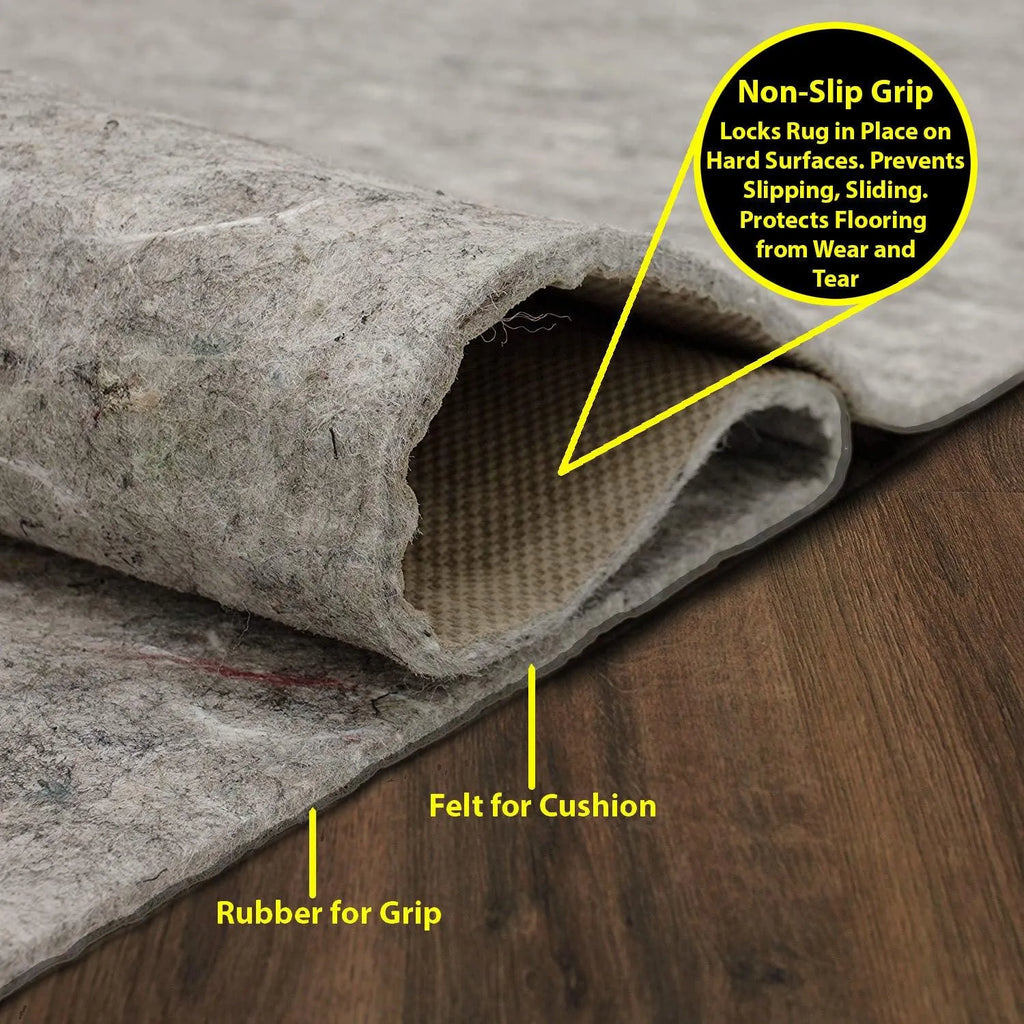
Multi Sizes LoomBloom Dual Surface Felt & Rubber Non-Slip Backing Rug Pad Made in USA
Select your rug size, we'll trim it accordingly.
Hand-knotted from New Zealand wool at a fine 150 KPSI, this Sarouk-style rug sets an allover floral and vine pattern in rust against a deep black border, with sage, turquoise, taupe, and gold woven throughout for a richly layered, jewel-toned palette. An antique finish and gold wash have been worked into the pile, softening the colors and giving the wool a warm, burnished glow that mimics the patina of a rug generations old. The dense, traditional Sarouk field pattern reads as formal and classic, ideal for a dining room or living room where a bolder, more saturated rug can anchor the space. *
- Exact Size: 8x9'11"
- Brand: Kalaty
- Weave: Hand Knotted Rug
- Yarn: New Zealand Wool
- Color: Rust, Black, Sage, Turquoise, Taupe, Gold, Multi
- Origin: India
- Pile Height: 0.6 inch
- Condition: New
- Condition Description: New With Tags
- Rug#: ORH21353
- Kpsi: 150
Story Behind the Art: Within the rug trade, the term Sarouk encompasses pieces woven in Arak, its surrounding villages, and the plains of Farahan in central Iran—an area long celebrated for its weaving excellence. In the 19th century, Sarouk rugs often displayed intricate allover designs such as the Herati and Gul Hennai, rendered with around 100 asymmetric knots per square inch on sturdy cotton foundations. By the late 1800s, inspired by the grandeur of Tabriz carpets, local weavers embraced a more formal aesthetic, producing factory-made rugs with central floral medallions and precise symmetry. This medallion style prevailed until the years following World War I, when Sarouk artisans pioneered a more open composition: graceful, detached floral sprays scattered elegantly across the field. This innovation became the defining hallmark of the Sarouk tradition, captivating global markets and collectors alike. Today, the influence of this design endures, with Sarouk-inspired rugs woven not only in Iran but also in India, Romania, and Pakistan—each echoing the enduring beauty and legacy of Persian artistry.
Want to see this rug in your room?
Picking the perfect piece has never been easier! Visualise it in your own space before making a decision.