


3x5 Aubergine Hand Knotted Tibetan 100% Wool ombre Modern & Contemporary Oriental Area Rug
Oriental Rug Of Houston
ORH15355
Regular price
$ 750.00
$ 250.00
Sale
Frequently Bought Together
-
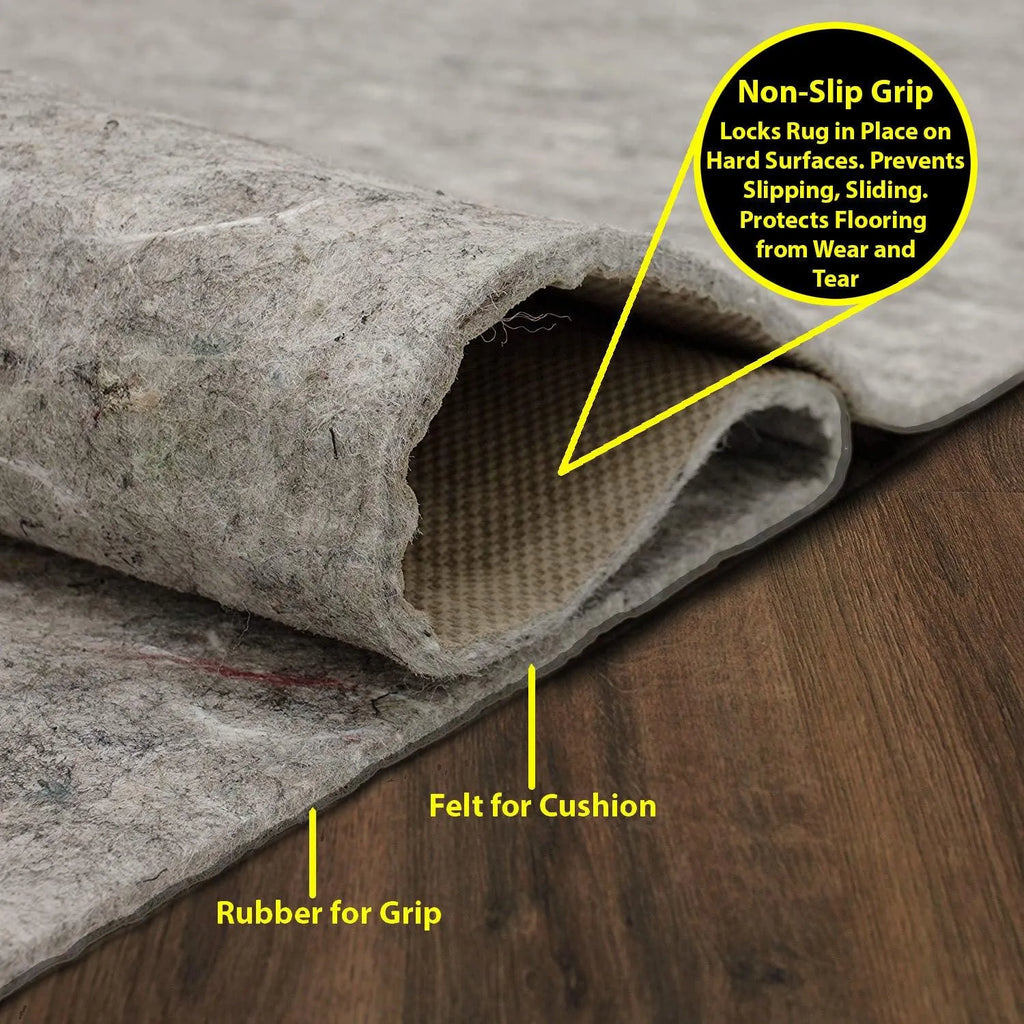
Multi Sizes LoomBloom Dual Surface Felt & Rubber Non-Slip Backing Rug Pad
Select your rug size, we'll trim it accordingly.
- Exact Size: 3' x 5'2''
- Weave: Hand Knotted Rug
- Yarn: 100% Wool
- Color: Aubergine, Tone on Tone Aubergine
- Origin: Nepal
- Pile Height: 1 inch
- Condition: New
- Condition Description: New with tag
- Rug#: ORH15355
Story Behind the Art For centuries Tibetans have used rugs for decorative and functional purposes, drawing upon geometric patterns, auspicious symbols, real and mythical animals, and natural imagery to create beautiful, colorful designs. But it was only after 1959 with the Chinese invasion of Tibet and the growth of Tibetan diaspora in Nepal and Tibet that Tibetan rug weaving underwent a crucial commercial revival. In the 1970s, Tibetan rugs rose to prominence and Nepalese artisans, drafted in to keep up with the rising demand, became the mainstay of the Tibetan rug weaving traditions. While either Turkish knot or the Persian knot (Senneh knot) is used to create the pile or depth of a rug in most of Asia, the Tibetan rug utilizes a slit-loop technique called the Tibetan knot. Here rugs are woven by wrapping a continues length of yarn over a rod laid across the warps stretched on the loom. When the rod has been wrapped for its entire length, a knife is slid along the rod, cutting the wrapped yarn into two rows of pile tufts. The resultant pile is a wonderful mix of depth, texture and richness. Traditional Tibetan rug motifs generally reflect the importance of Buddhist religion in Tibetan art and culture. Many design elements of Chinese origin like the phoenix, dragon, and lotus symbols alongside motifs from Chinese decorative tradition have also been assimilated in the rug repertoire of this region. In modern times, designs featured in Tibetan, Nepalese rugs (those woven by Tibetan refugees in Nepal) and Indo-Tibetans (woven in India) range from Westernized adaptations of traditional Tibetan motifs (such as branching floral designs and snow lions) to a large mixture of foreign and modern free-form patterns.
Want to see this rug in your room?
Picking the perfect piece has never been easier! Visualise it in your own space before making a decision.